Free Roof Inspection Checklist: What Every Homeowner Should Expect in 2026
Written by Marc D., GCT Expert Analyst · Updated July 2026 · 6 min read
A real free roof inspection covers 42 verifiable points across the exterior, attic, flashings and ventilation. Here is the checklist to hand your inspector — and the red flags that mean the inspection is a sales pitch, not a diagnosis.

Direct answer
A legitimate free roof inspection in 2026 is a 42-point diagnostic covering the exterior, attic, flashings, ventilation and drainage — documented with photos and a written report. Anything shorter is a lead-generation visit, not an inspection. This guide gives you the exact checklist to hand the inspector, the red flags that mean the visit is really a sales pitch, and what happens after the report.
Who Offers Free Roof Inspections and Why
Most "free" inspections come from three sources:
- Roofing contractors hoping to quote a repair or replacement.
- Storm-chaser crews targeting neighbourhoods after hail or high winds.
- Insurance-affiliated inspectors documenting damage for a claim.
A free inspection is legitimate when the inspector arrives with a written checklist, spends 45 to 90 minutes on site, enters the attic, and leaves you a written report with dated photos. It is a sales visit when it lasts 15 minutes, skips the attic, and ends with an on-the-spot pressure to sign.
What a Real Free Roof Inspection Covers
Exterior Inspection — 12 points
From the ground with binoculars and, when safe, from the roof:
- Missing, cracked, curled or blistered shingles
- Granule loss visible in gutters or downspout splash zones
- Lifted or exposed nails along the ridge and hips
- Sagging roof lines (structural deflection)
- Moss, algae or lichen growth on north-facing slopes
- Damaged, rusted or lifted metal flashings
- Deteriorated pipe boots and vent stack seals
- Loose or missing ridge caps
- Chimney condition: cap, crown, counterflashing
- Skylight seals, curbs and step flashings
- Gutter attachment, slope, and evidence of overflow
- Downspout discharge distance from foundation
Attic Inspection — 10 points
The attic tells you what the roof will not:
- Daylight visible through the deck (unsealed penetrations)
- Frost, condensation or moisture on the underside of the sheathing
- Stained or wet insulation, especially near eaves and valleys
- Compressed insulation blocking soffit intake
- Bath, kitchen or dryer fans venting into the attic instead of outside
- Recessed lights protruding without IC-rated covers
- Nail pops or shiners on the underside of the deck
- Truss or rafter damage, cracks or previous repairs
- Rodent or bat activity (droppings, nests)
- Ventilation baffles present and unblocked at every rafter bay
Flashing Inspection — 8 points
Flashings cause 80% of avoidable leaks in Canadian homes:
- Chimney counterflashing embedded in the mortar
- Step flashings woven with the shingles at every course
- Kickout flashing at the eave-to-wall transition
- Valley flashing type (open metal, closed cut, or woven) and condition
- Skylight head, side and apron flashings
- Pipe boot rubber gasket cracks (typical life 8-12 years)
- Drip edge present at eaves and rakes (Ontario Building Code requirement post-2012)
- Wall-to-roof transitions on additions and dormers
Ventilation Inspection — 6 points
Balanced ventilation is 1 sq ft of NFVA per 300 sq ft of insulated ceiling:
- Intake vents (soffit) unblocked and free of paint
- Exhaust vents (ridge, static, or turbine) sized to the attic volume
- Intake-to-exhaust ratio balanced (50/50 or slightly intake-biased)
- No mixing of ridge and static vents (short-circuits airflow)
- Gable vents closed if a ridge vent is present
- Continuous soffit venting where possible
Drainage and Ice-Dam Signs — 6 points
Critical in Quebec and Ontario winters:
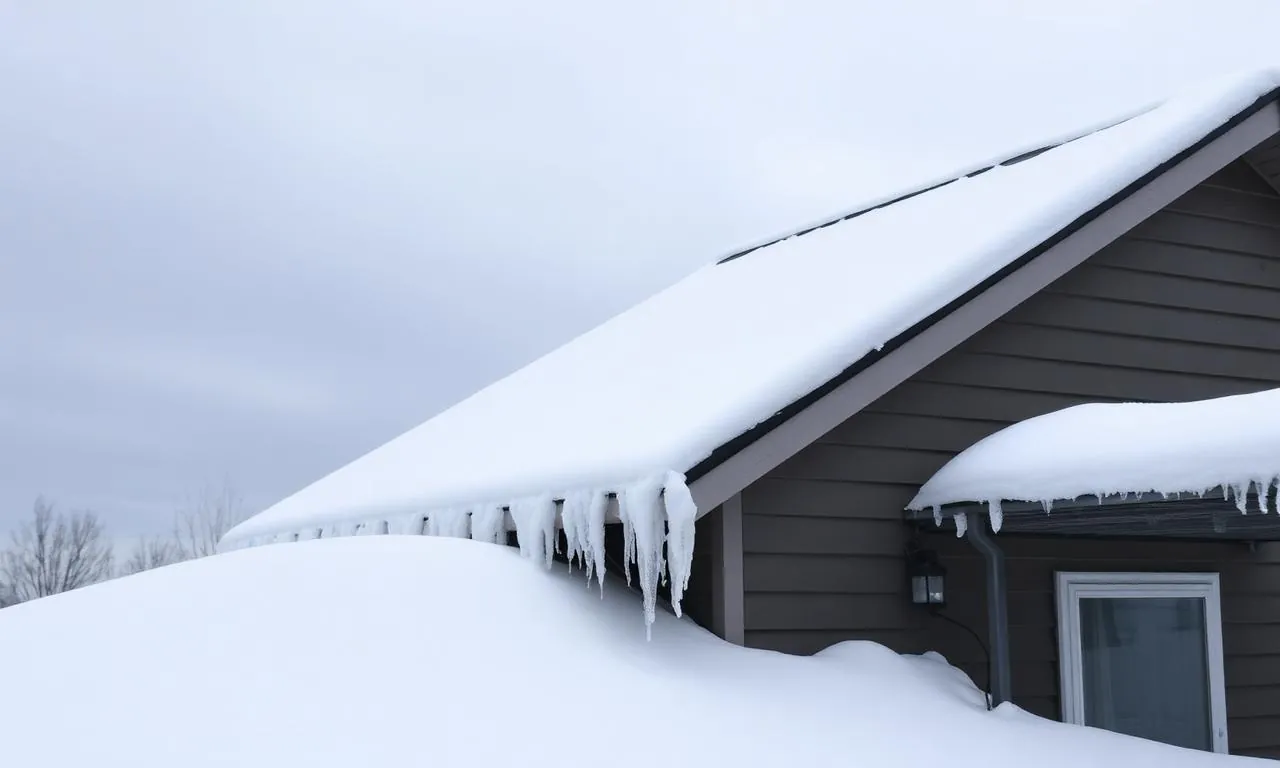
- Ice-dam staining or shingle damage along the eaves
- Ice & water shield extending at least 3 ft up the slope from the eave
- Gutters sloped 1/4 in per 10 ft toward the downspouts
- Downspouts discharging away from the foundation
- Valley membrane present and intact
- Kickout flashings directing water into the gutter
What Happens After the Inspection
The inspector should leave you with:
- A written report covering all 42 points, with photos of any deficiency.
- A severity rating (immediate, 1-year, 3-5-year) for each issue.
- An estimated remaining lifespan of the current roof.
- If quoting work, a separate written estimate — never bundled into the inspection report.
If what you receive is a single verbal opinion ending with "you need a new roof today," the inspection was a sales call.
How to Prepare for a Free Inspection
- Clear a path to the attic access.
- Have the roof's install date and any prior repair invoices ready.
- Ask if the inspector will access the roof safely (harness, ladder rating).
- Confirm in writing that the inspection is free and non-binding.
- Take your own photos before and after the visit.
Red Flags: When a Free Inspection Is Really a Sales Pitch
- Arrives without a written checklist or camera.
- Skips the attic entirely.
- Under 20 minutes on site for an average residential roof.
- Refuses to give a written report unless you sign a contract.
- Claims damage you cannot see in the photos.
- Insists on a same-day decision or a "today only" discount.
- Cannot show WSIB/CNESST clearance or civil liability insurance.
- No RBQ (Québec) or Master Roofer designation (Ontario) available on request.
Free vs. Paid Inspections: When to Pay
| Situation | Free is fine | Pay for independent |
|---|---|---|
| Pre-listing home sale (< 3 yrs old roof) | Yes | Optional |
| Storm or hail damage claim | Yes (through insurer) | Consider paid second opinion |
| Roof over 15 years old | Second opinion recommended | Yes |
| Persistent leak, no visible cause | No | Yes ($250-$600) |
| Pre-purchase home inspection | Included by home inspector | Add roofing specialist |
| Condo board or commercial building | No | Yes — engineer or specialized service |
An independent paid inspection ($250-$600 in Quebec/Ontario) has no financial incentive to recommend replacement. A free contractor inspection has an inherent bias — that does not make it useless, but you should never sign a contract based on one alone.
After the Inspection: How to Read the Report
A solid inspection report includes:
- Executive summary (roof condition score 1-10, urgency level).
- Deficiency log with location, photo reference and repair method.
- Remaining useful life estimate (in years).
- Prioritized action list (immediate / within 12 months / within 3-5 years).
- Estimated repair budget per line item.
- Disclaimer stating the inspection is visual only.
Compare two reports before committing to any work over $2,000. Divergent findings on the same roof reveal which inspector is calibrated to real deterioration versus artificial urgency.
FAQ — Free roof inspection checklist
How long should a free roof inspection take?
Between 45 and 90 minutes for an average single-family home, including the attic and a written report. Under 20 minutes is a sales visit.
Should I be home during the inspection?
Yes. Walk the perimeter with the inspector, ask about each deficiency and request photos on the spot.
Is a free inspection enough to file an insurance claim?
Usually not. Insurers accept reports from licensed contractors or independent inspectors, and often require a claim-specific adjuster visit as well.
Can I trust a free inspection from a door-to-door canvasser?
High caution. Verify the RBQ or master-roofer credential, confirm the company address and reviews, and never sign anything on the same day. In Ontario, the Consumer Protection Act 2002 grants a 10-day cooling-off period on door-to-door contracts.
How often should I get a roof inspection?
Every 2-3 years for a roof under 10 years old, annually after year 10, and after every major storm event (hail, wind gust over 90 km/h, heavy ice accumulation).
What is the difference between an inspection and an evaluation?
An inspection documents current condition. An evaluation (or expert assessment) adds a remaining-life estimate, replacement budget and repair-vs-replace recommendation — usually a paid service.
Received a roofing quote?
Have your quote reviewed before signing. GCT Expert helps Québec homeowners better understand prices, contracts and risks tied to roofing work.
Review my quote